
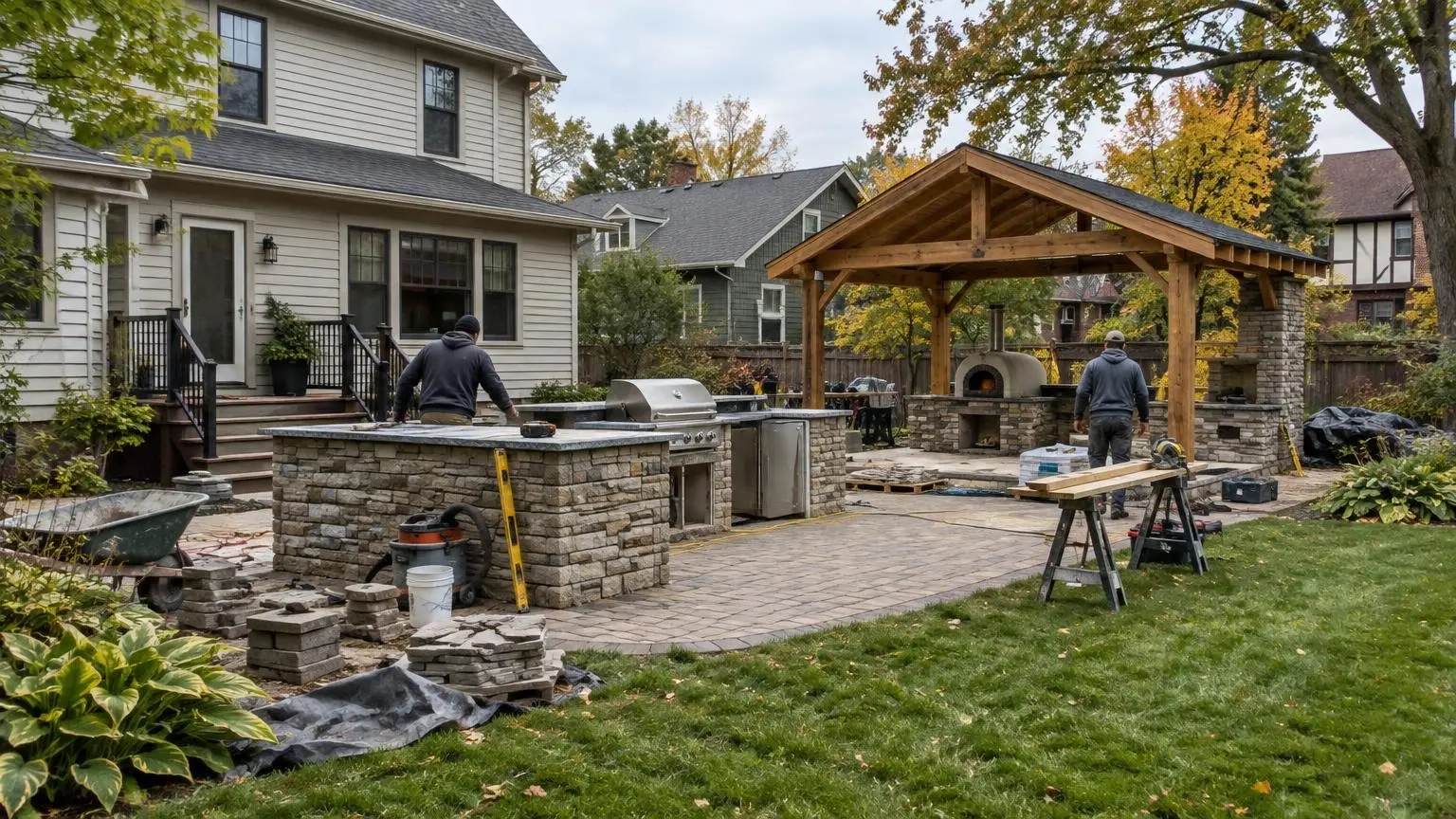
Surfaces that stand up to ice and sun
Outdoor Kitchen Countertops in Minneapolis, MN
The right slab, sealed and set so meltwater runs off instead of soaking in.
- Free on-site estimates
- Line-by-line written pricing
- Every layout planned for Minnesota winters
Why Countertop Choice Matters More Here
Outdoor kitchen countertops in Minnesota face a test that indoor surfaces never do. Rain and snowmelt soak into anything porous, and when that water freezes it expands. Repeat that through dozens of thaw-and-freeze swings each spring and fall and weak materials start to crack, spall at the edges or pop loose tiles. The surface also takes full summer sun, grease, hot pans and the occasional dropped tool. We help you choose a slab that handles all of it, and we set it so water drains off.
Materials we recommend most
Granite is dense, hard and heat-resistant, and most granites absorb very little water once sealed. Darker colors can get hot in direct sun, so lighter granites are popular for uncovered islands. Porcelain slabs are fired at high temperature and absorb almost no water. Caesarstone, a slab maker, says its porcelain resists UV and can resist cracking in freezing temperatures. Porcelain is thinner than stone, so edges and corners need careful support. Bluestone and soapstone are natural options with a softer look; both need sealing or oiling and occasional upkeep.
Materials to think twice about
- Tile: inexpensive, but every grout line is a place for water to enter and freeze.
- Site-cast concrete: can work if mixed and sealed properly, but small hairline cracks are common and need resealing.
- Marble and limestone: softer and more porous; they etch and stain easily outdoors.
- Engineered quartz: many indoor quartz products are not rated for outdoor sun; check the maker's outdoor rating before choosing one.
How we install them
We template after the island is built, so the slab fits the real structure, not the drawing. Slabs are set on a solid, level substrate with full support under seams and cutouts. We build in an overhang with a drip edge so water falls clear of the veneer below, keep seams away from the grill cutout where heat cycles are greatest, and leave the correct air gap around the grill as its installation manual specifies. Sinks are undermounted or drop-in depending on the material, and every cutout is sealed.
Care through the seasons
Natural stone should be sealed on the schedule the fabricator recommends; a simple test is whether water still beads on the surface. Before winter, clean off grease and food, which can stain and attract animals, and cover the counters if possible. Do not use rock salt or chemical de-icers on or near stone countertops, and avoid chipping ice off the surface with metal tools.
Replacing an old top
If you already have an island with cracked tile or a failing concrete top, the base may be worth keeping. We check that the structure is level and sound, remove the old surface and set a new slab, often adjusting the grill cutout if you are upgrading the grill at the same time.
What This Covers
Countertop work runs from choosing the slab to sealing the last seam.
Material selection
Granite, porcelain, soapstone, bluestone or concrete matched to sun, cover and use.
Templating and fabrication
Measured on the finished island, with cutouts for grills, burners and sinks.
Installation
Full support under seams, drip-edge overhangs and correct grill clearances.
Top replacement
Old tile or concrete tops removed and replaced on a sound existing island.
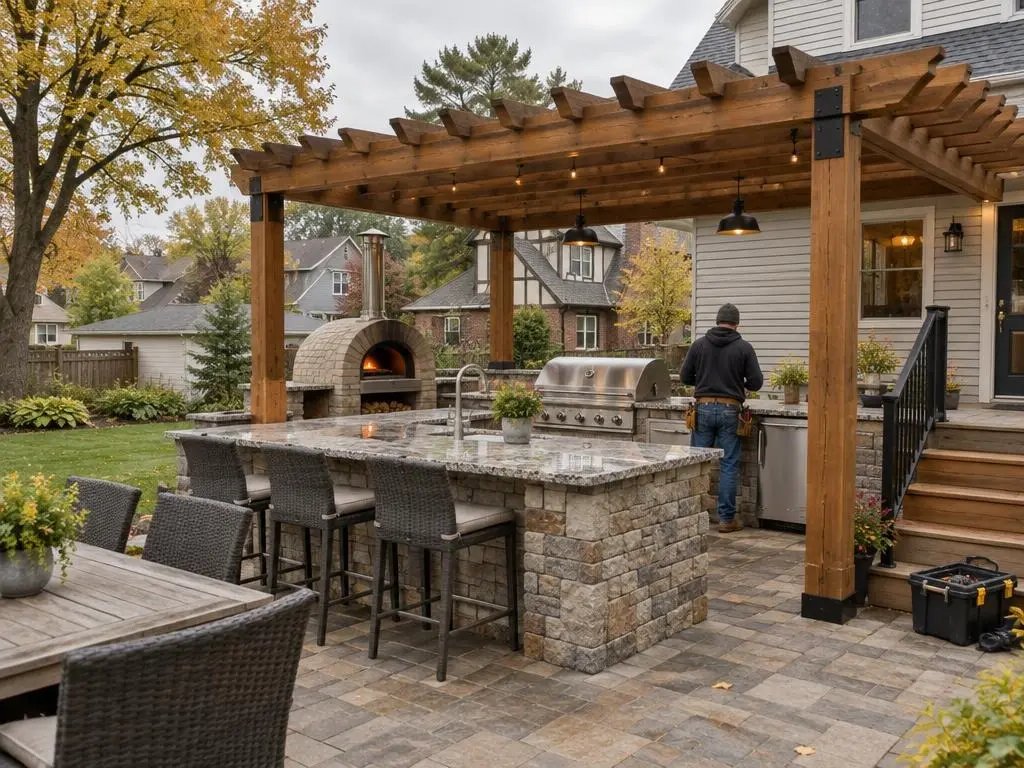
Typical Outdoor Countertop Costs
| Material (installed) | Published range per sq ft |
|---|---|
| Porcelain | $50 to $120 |
| Granite | $70 to $150 |
| Bluestone | $60 to $120 |
| Soapstone | $60 to $180 |
| Concrete | $50 to $150 |
| Stainless steel | $50 to $200 |
| Tile | $4 to $45 |
Ranges combine HomeGuide (2026) and Fixr (2025) national figures. Fixr puts an average outdoor countertop at about $4,000. Edge profiles, cutouts, slab color and access change the price. The figure on your signed proposal is what you pay.
How It Works
1. Choose the surface
We compare materials for your sun, cover, budget and look.
2. Template
The finished island is measured, including every appliance and sink cutout.
3. Fabricate
The slab is cut, edged and finished to the template.
4. Set and seal
The top is installed with full support and drip edges, then seams and stone are sealed.
Outdoor Kitchen Countertops Questions
Which countertop lasts longest outdoors where winters freeze?
Dense, low-absorption materials hold up best through freeze-thaw. Sealed granite and outdoor-rated porcelain are the most common choices around the Twin Cities. Tile and porous stone are more likely to crack when water gets in and freezes.
Can granite countertops stay outside in winter?
Yes. Granite stays in place year-round as long as it is sealed, supported properly and allowed to shed water. A cover helps keep snow and debris off, and you should avoid de-icing salt on the surface.
Is quartz OK for an outdoor kitchen?
Many engineered quartz products are made for indoor use, and sun exposure can discolor them. Some makers offer outdoor-rated lines; check that rating before choosing quartz for an uncovered island.
How often should outdoor stone countertops be sealed?
It depends on the stone and the sealer, so follow the fabricator's recommendation. A quick check is to sprinkle water on the surface: if it darkens the stone instead of beading, it is time to reseal.
Can you put a new countertop on my old outdoor kitchen?
Usually, if the island underneath is level and sound. We remove the old surface, check the structure and set a new slab sized for any new grill or sink.
Outdoor Kitchen Countertops Service Areas
- Outdoor Kitchens in Minneapolis, MN
- Outdoor Kitchens in Saint Paul, MN
- Outdoor Kitchens in Edina, MN
- Outdoor Kitchens in Minnetonka, MN
- Outdoor Kitchens in Wayzata, MN
- Outdoor Kitchens in Orono, MN
- Outdoor Kitchens in Eden Prairie, MN
- Outdoor Kitchens in Plymouth, MN
- Outdoor Kitchens in Maple Grove, MN
- Outdoor Kitchens in Lakeville, MN
- Outdoor Kitchens in Woodbury, MN
- Outdoor Kitchens in Stillwater, MN
- Outdoor Kitchens in Chanhassen, MN
- Outdoor Kitchens in Excelsior, MN
- Outdoor Kitchens in Prior Lake, MN
- Outdoor Kitchens in Shorewood, MN
- Outdoor Kitchens in North Oaks, MN
- Outdoor Kitchens in Mendota Heights, MN
Get a Outdoor Kitchen Countertops Estimate
Free countertop consultations and measurements.